Showing posts with label Barbecue. Show all posts

Saturday, September 22, 2012

Best Wines for Barbecue

Beer may be the first thing that comes to mind, but the right wines can be amazing with smoky barbecued meats. F&W’s Ray Isle names the best bottles to pair with ribs, brisket, pulled pork and sausage. Featured Recipes

Some time ago, I had the odd honor of being a judge at the Jack Daniels World Championship Invitational Barbecue, one of the bigger meat-fests in the barbecue circuit. I can’t recall who won what, but I vividly recall walking up the stairs to my second-floor motel room, listening to two portly fellows loudly discuss the merits (and drawbacks) of possum and raccoon barbecue. In that context, pairing wine instead of beer with barbecue seems a bit twee, sort of like playing Chopin nocturnes at a Nascar race, but what the heck. What are cliffs for but to fling oneself off of?

Wines for Barbecued Ribs

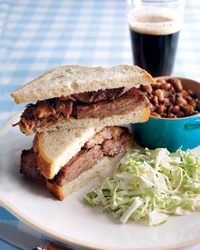
Being a Texan, my heart believes that real barbecue is made from cow, not pig, despite a lot of Southern evidence to the contrary. Anyway, that’s a battle to be fought by diehards. Ignore them. Drive to Louie Mueller’s in Taylor, TX, order yourself some of their sublimely excellent brisket, and then figure out some way to drink a good Cabernet blend with it. The 2009 Cameron Hughes Lot 249 Alexander Valley Meritage ($12) is a fine choice.

Wines for Sausage

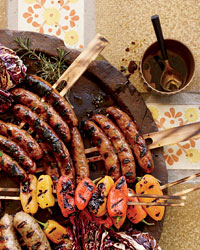
On the day that New York’s Hill Country BBQ decided it was a good thing to import sausages up from Kreuz Market in Lockhart, TX, the clouds parted, the sun shone, and all was good upon the land. Seriously. And if one were going to pour a glass of wine to go with these juicy, sublimely spiced links, I think a Zinfandel—itself a spicy number—would be the answer. The 2010 Bogle Old Vine Zinfandel ($11) is an in-your-face example, in a good way.

Wines for Pulled Pork

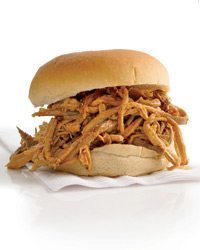
An excellent counter-argument from the South to this whole Texan beef-business. Good pulled pork (Sweatman’s, in Holly Hill, SC, about 50 minutes outside Charleston, is hard to beat) has a sublime balance of porkiness, juiciness, and smoke thatought to make Pierre Gagnaire wonder if perhaps he picked the wrong cuisine to specialize in. In South Carolina the sauce is mustardy and a bit sweet; in North Carolina, it’s more vinegary. I’d eat both with a dry rosĂ©, though honestly if I did that I’d probably get my butt kicked. Try (if you’re willing to risk it) the fruity 2011 Frog’s Leap La Grenouille Rougante ($16).

Wines for Barbecued Ribs

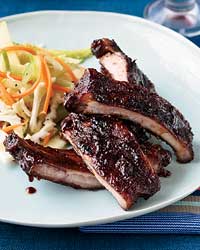
Frank Zappa, in his little-known but much-loved (ok: by a few freaks) anthem “Muffin Man,” intones this immortal line: “There is not, nor ought there be, anything so exalted on the face of God’s gray earth as that prince of foods...the muffin.” Hm. Let’s change that to ribs, ok? I can think of almost no instance when I wouldn’t trade whatever is on my plate for some truly great bbq ribs, like the ones from Mike Mills’ 17th Street Bar & Grill in Murphysboro, IL. Lots of flavor, lots of juice, and, admit it, lots of fat—if wine is on the table, make it a big, brawny Syrah, like the robust 2009 Cambria Tepusquet Syrah ($22).

Related Articles

View the original article here

Thursday, September 6, 2012

Elizabeth Karmel’s Essential Barbecue Trail

“Barbecue is like religion and politics: People are passionate about it. There are many regions, and every region thinks they are the best,” says Hill Country chef Elizabeth Karmel. Here, the North Carolina native offers a mouthwatering regional barbecue guide, which explains how she became an “all-encompassing, equal-opportunity barbecue lover.” Elizabeth Karmel’s Essential Barbecue Trail
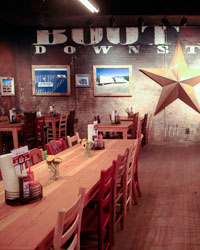
Probably the most similar to North Carolina, and that’s what drew me to it: They’re both all about the meat, though because of its long history of cattle ranching, Texas is traditionally beef. In the central part of Texas, the Hill Country, where Hill Country Barbecue originates, people use Post Oak wood because it grows indigenously there. They use a simple rub of salt, butcher-ground black pepper and just enough cayenne to turn the rub a light pink color.

They like to say, “We barbecue anything that moves.” They’re very partial to sauce, a very thick, red sauce. I think that the average American identifies with this barbecue region.

Memphis is known as the home of the dry rub, but they use a lot of sauce in Memphis, too. And Memphis pulled pork uses more of a sweet red sauce in their pulled pork, as opposed to the lighter tangy, peppery Carolina vinegar sauce.

North Carolina barbecue traditionally uses pork because of all the pig farms in the state. Hickory grows widely in North Carolina, so people tend to use hickory wood. In North Carolina the rub is just salt and pepper, no cayenne. Within North Carolina there are two subregions:

In Eastern North Carolina barbecue the sauce is vinegar-based, very peppery. And they don’t use ketchup.

In Western North Carolina barbecue they add a little ketchup, which turns the sauce red. I grew up in the Piedmont area, which is sort of halfway between the two, but by barbecue standards it’s considered Western, and we add ketchup to the vinegar sauce.

Then there’s the mustard region, a pocket in Georgia and a pocket in South Carolina. South Carolina is really the region that popularized the mustard, especially right around Columbia. And you know what? It’s not bad. The first time I tried it, I was skeptical, but if you think about it, they use yellow mustard, French’s mustard, that has a lot of vinegar in it anyway. So when I ate it, I was like, “OK! It’s just a yellow vinegar sauce!” But of course I still prefer what I grew up with.

Those are the major regions. But once you leave those, you’ve got St. Louis, where people are barbecue-crazy, and Alabama, which has a famous barbecue restaurant—Big Bob Gibson’s, where Chris Lilly is the pitmaster—that wins lots of awards. And then there are people in California who put their name on barbecue.


I gotta give a shoutout to my two Carolina boys. In Eastern North Carolina, Ed Mitchell is like the barbecue Santa Claus of the community. He uses a barrel smoker and smokes whole hogs, which not everybody does. Where I grew up, barbecue was a butt or a shoulder. But he does it the old-school way, which makes a big difference when he chops it all together. He’s got the ham, the shoulder, the tenderloin, a little bit of everything in there. You’ve got meat that’s a little bit leaner, a little bit moister, a little bit more tender, a little tougher—all of it together. He was at The Pit in Raleigh; now he left to open his own place. People can find him at the Big Apple Barbecue Block Party in New York.

Rodney Scott is from South Carolina, but he doesn’t do a mustard sauce because he’s not from that part of the state. He does a mop with vinegar and some other secret ingredients, and it’s very, very peppery. He butterflies the whole hog just like Ed does, but he cooks it on a really hot open fire. That’s not done by very many people, though I’m sure this is how it was done to celebrate the fall slaughter when everyone had land and livestock, including pigs. The great thing is, someone is honoring that tradition in a restaurant. TheScottsBBQ.com

Mike Mills is otherwise known as The Legend. His baby back ribs are legendary. He cooks each and every slab of ribs by feel. He is the barbecue grand master of “feeling the love.” His baby backs are just perfect. They’re kissed with smoke and have this beautiful hot pink smoke ring on them. They have just enough chew that you feel like you’re eating meat, yet they melt in the mouth into delicious pork heaven. 17thstreetbarbecue.com

They are the patron saints of Hill Country. We’re different, but they were our inspiration. I like that it’s all about the meat, it’s really simple, using Post Oak, and it’s just the way it’s been done for more than a hundred years; it’s now third-generation. They use an open fire box, and their smoker looks like a big brick coffin with a roaring fire on one side. The smoker is huge; it must be 40 feet of brick, steel, smoke and meat. And they have four of them. They also cook very, very hot. To create indirect heat, they move the meat from end-to-end of their pit with meat pins that are also more than 100 years old. It’s a sight to be seen. It’s so pure and unpretentious—it’s a great and true barbecue experience. KreuzMarket.com

If you like urban barbecue and you didn’t grow up in the South but you love well-smoked meat and tangy sweet sauce Dinosaur can’t be beat. They have tremendous respect for barbecue, even though they’re from upstate New York, which is not a “traditional” barbecue region. They do a great job of smoking their meat, and they add just enough sauce to keep it moist. They respect the meat. And I love that they say that barbecue saved their lives, because I think that the popularity of barbecue has played a role in saving American culinary traditions, particularly Southern culinary traditions. DinosaurBarbque.com

Find more of Elizabeth Karmel’s favorite stops along the barbecue trail on her website elizabethkarmel.com.

Related Articles

View the original article here

Friday, March 9, 2012

Achieving Excellent Gourmet Barbecue


Gourmet food can come in different forms and can be prepared in a number of methods. One of these is barbecuing. It is probably one of the favorite Saturday activities for many people of different races. The beauty of this activity is that it also a unifying event between friends and family members. To tweak the barbecuing skills a little, you may opt to look for gourmet food recipes.

There are some techniques to be followed so you can get the best tasting gourmet barbecue. For the preparation phase, it is highly recommended that you see to it that the grills are bacteria free by cleaning them thoroughly. The distance between the grill and the flame has also impact on the taste. The preparation of the fore itself should be earlier so as to cooking will be done on coals and not on flames.

When following a Gourmet Barbecue Recipe, it is essential to follow all the steps stipulated in it. When preparing the meat, see to it that the sizes are relatively similar. This way, they will be cooked evenly and it will be easier to prepare the meals in volume. Marinating should be done properly to achieve the desired tenderness of the meat as taste also depends on it. The meat should also sit for a minimum of three hours. However, it is preferred to have it marinated overnight so the meat can capture the flavor very well. It is necessary to be careful when turning your meat to its other side. Piercing the meat can have ugly repercussion on the flavor, tenderness, and juiciness of your meat. Piercing the meat will dry the meat out.

To sum up, there are three factors to consider when following Gourmet Barbecue Recipe. They are an excellent marinade, brilliant method, and high-quality accompaniments.


Stuart is writing for many websites, he enjoys writing on wide range of topics such as Gourmet Food Recipes. You may visit for more details.


Monday, February 27, 2012

Gourmet Barbecue - My Personal Favorite


Lest anyone misunderstand the intent of this article, let me say up front that I, in no way, am knocking the men and women who comprise the fine dining industry. I am not casting aspersions on the food, quality of food, quantity of food and character of anything served at a gourmet restaurant. There is definitely a place for fine food dining in this country!

Barbeque however, is one of the great delicacies of the south, no matter whether its chicken, pork ribs, beef brisket or pork chops. My personal favorite, barbequed pork ribs are rarely, if ever, found on the menu of fine dining restaurants. That omission is an indication of how this great food item is discriminated against by gourmet restaurants.

Maybe the barbequed rib has just not climbed its way to the top of modern culinary society yet. My thoughts are that it is just too good to be placed on the same menu as a "Pan Seared French Cut Pork Loin Chop served with baby new potatoes and a cheery medley of spring greens."

Imagine opening the menu at any stuffed shirt restaurant where the dinner meals start at $50.00 per person and reading down:

"Tonight's house specialty is Honey and Soy Glazed Sea Bass, garnished with tiny sprigs of rosemary. Sides are delightful broccoli crowns steamed with basil and tarragon. A creamy garlic mashed potato with fresh clipped chives round out the meal. Our wine cellar is excellent"

Just below this you might find other offerings to temp your pallet such as:

Macadamia Nut-Crusted Mahi Mahi with Tropical Fruit.

Rack of Ellensburg Lamb with Pinot Noir-Thyme Sauce.

Somewhere near the bottom of the menu you should see in proud bold, block lettering: "Hickory Smoked Rack of Ribs! Slow cooked in a hickory smoker for 3 -4 hours, these pork ribs will fall off the bone as you lick the barbeque sauce from your fingers. Hand rubbed into the meat we feature an assortment of spices: garlic salt, salt, pepper, oregano, chili pepper, cayenne pepper, and onion pepper. While the meat is cooking in the smoking chamber it is kissed with our own secret red sauce."

This sounds a little uppity for the good old barbequed rib doesn't it? Ribs, chicken and the like have been relegated to the kitchens of Ma and Pa diners and rib houses that specialize in barbeque. Most of these restaurants are packed with faithful customers most of the time; especially on the weekends. Barbeque aficionados are a loyal crowd. When they find a place they like, they keep coming back for more!

Why then is barbeque not highlighted on the menus of the finest gourmet restaurants in America? Portions! That's the key. In most places of fine dining, the portions of any one thing are ridiculously small. On the other hand when you leave a barbecue joint you're holding your belly because you're stuffed. No small amounts of food here!

Why then do they have portion control at fine dining joints? I think the gourmet food people stumbled onto something a long time ago that the barbecue business has yet to realize. The entrees and appetizers at most of these places are quite expensive. Add that fact that most of the meals featured are weird! They're not usually something that we would prepare at home, so frankly, no one knows how each item is really supposed to taste.

Then, because gourmet restaurants blatantly keep their prices at extortion levels, we feel that whatever they feed us is wonderful because it costs so much! It simply has to be good! Most of us would have to carry our lunch to work for a month in order to pay for one night out with Chef Pierre. That being the case the meals must be wonderful regardless of what our tummies are telling us.

That's it in a nutshell. Serve very small portions, make it so that no one knows if it's good or bad, make it expensive and put the knives and forks in the correct positions. It can then be called gourmet.

Even though in the south every red blooded American male thinks he can cook the best barbecue in the world, we still enjoy going out to eat someone else's cooking and enjoy the ambiance of knotty pine paneling and vinyl table cloths that would enhance any dining experience. Maybe it would make a difference if there was a maitre d' to seat us as we entered the establishment.


Bob Alexander is well experienced in outdoor cooking, fishing and leisure living. Bob is also the author and owner of this article. Visit his sites at: [http://www.bluemarlinbob.com]

[http://www.redfishbob.com]